
Read Write Inc
What is Read Write Inc?
At Abbeys, we use the Ruth Miskin Read Write Inc synthetic phonics programme to teach children to read and write. We aim for children to be secure with their phonics knowledge before the end of Year 2, but continue to use the programme into Year 3 and beyond, where needed, to support children to become confident readers and writers across the curriculum and ultimately individuals with a love of reading.
Staff are trained and regularly coached by the Phonics Leader in the structure for teaching the programme. This supports us in ensuring consistency in set up and delivery of learning. Some staff are also trained in adapting the programme to support children with SEND, such as non-verbal learners or those who need the programme to be broken down into smaller steps.
Five key principles underpin the teaching in all Read Write Inc. sessions:
- Purpose – know the purpose of every activity and share it with the children, so they know the one thing they should be thinking about
- Participation – ensure every child participates throughout the lesson. Partnership work is fundamental to learning
- Praise – ensure children are praised for effort and learning, not ability
- Pace – teach at an effective pace and devote every moment to teaching and learning
- Passion – be passionate about teaching so children can be engaged emotionally
How does this look in school?
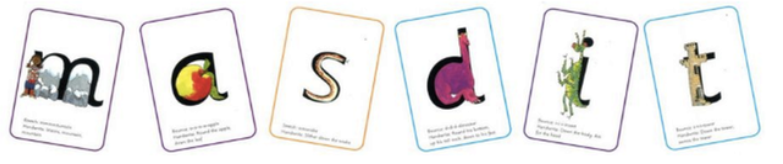
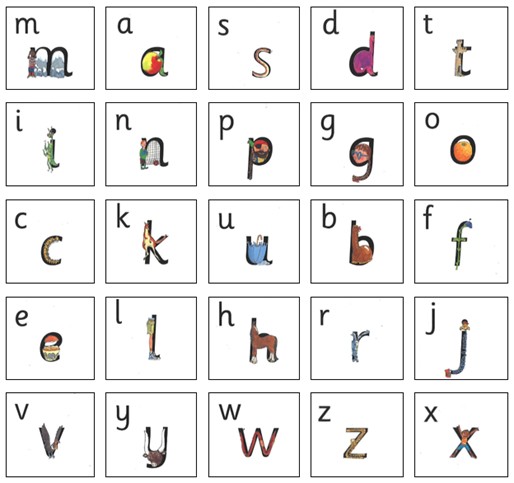
This begins when children join in Reception. They begin daily phonics lessons, initially in classes and then in progress groups, from their first full week: beginning by identifying the picture side of the sound cards. Afterwards, children begin recognising and saying the single sounds, as well as blending those sounds orally or with magnetic letters to make words. This builds to reading green word cards using those sounds and then children start to learn Set 1 ‘Special Friend’ sounds where 2 letters make 1 sound. (See below for more details)
Children are then able to read sentences and eventually simple stories using their phonics knowledge and red words (non-decodable words) in their reading. The children also learn to write the sounds they learn using letter formation phrases to help them and then use their ‘Fred Fingers’ to spell and write simple words.
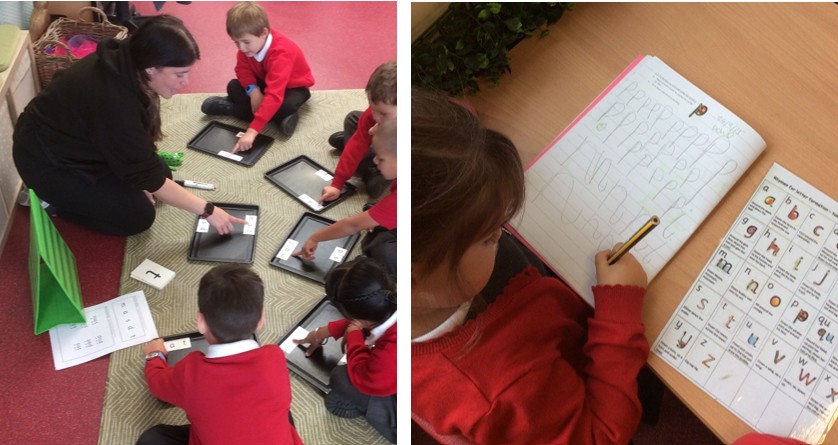
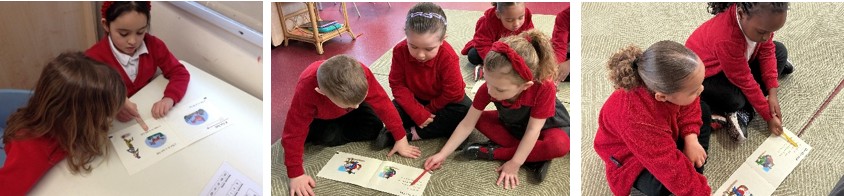
Children continue to use the programme in Year 1 and 2 in daily phonics lessons, matching their knowledge of sounds to their level of learning. Based on assessments, children are grouped and focus on learning either set 1, 2 or 3 sounds (see below for more details) and working with a partner for reading words and books which apply them.
How does my child move on in their phonics learning?
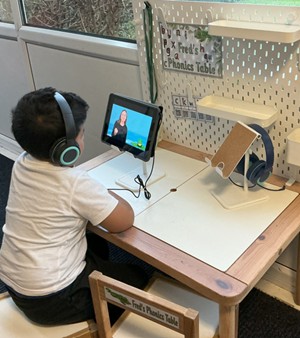
Half termly assessments by the Phonics Leader and a number of other trained staff allow us to regroup children, as well as to identify children who need further support and intervention. They are provided with additional tuition in the afternoons, as well as time on the sounds throughout the day using video links, pinny time or speed minutes to support them to keep up with the programme expectations.
How can I support phonics learning at home?
At home, families can support this learning by helping children to regularly practise their sounds and, when ready, text reading. Discussing books together and sharing a love of reading.
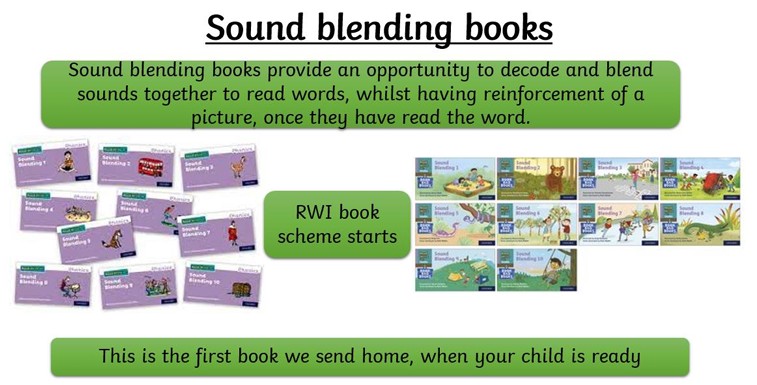
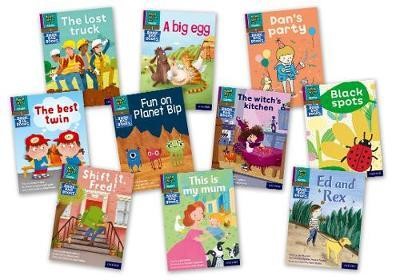
This can be done using ‘Book bag books’ sent home weekly, once children reach the blending stage. These books are specifically pitched to both consolidate learning and provide challenge to develop fluency in reading by rereading them again and again.
QR codes are also provided frequently in the Reception year to offer video links from the Ruth Miskin website, which children can watch to revisit and rehearse learning from school.
What are set 1, 2 and 3 sounds?
Set 1 single sounds:
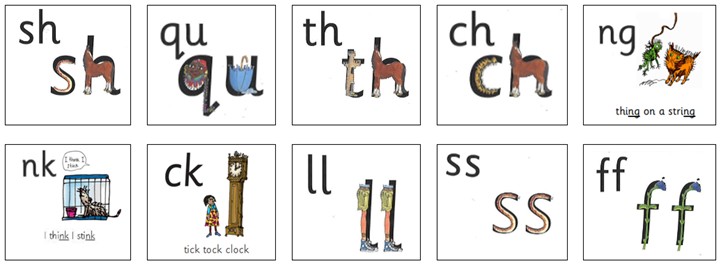
Set 1 Special Friends:
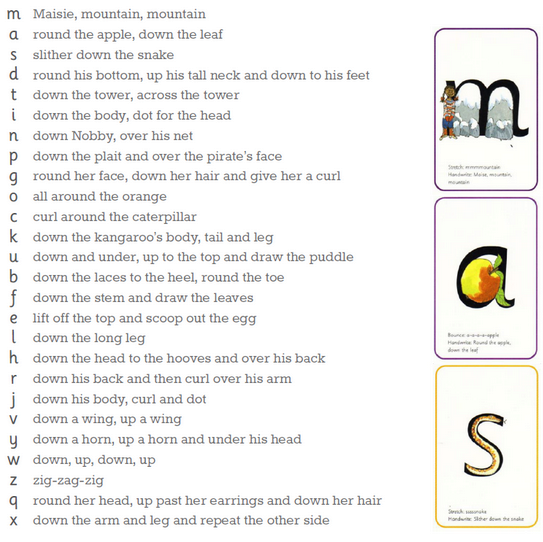
Handwriting phrases for Set 1 sounds:
Set 2 sounds:
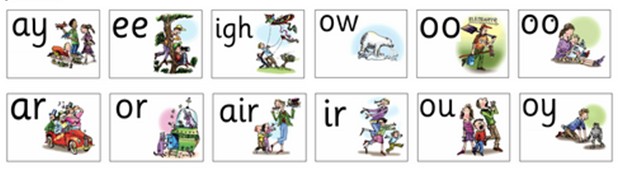
These are long vowel sounds, which again have a memorable phrase to help children remember them.
ay: May I play?
ee: What can you see?
igh: fly high
ow: blow the snow
oo: poo at the zoo
oo: look at the book
ar: start the car
or: shut the door
air: that’s not fair
ir: whirl and twirl
ou: shout it out
oy: toy to enjoy
Set 3 sounds:
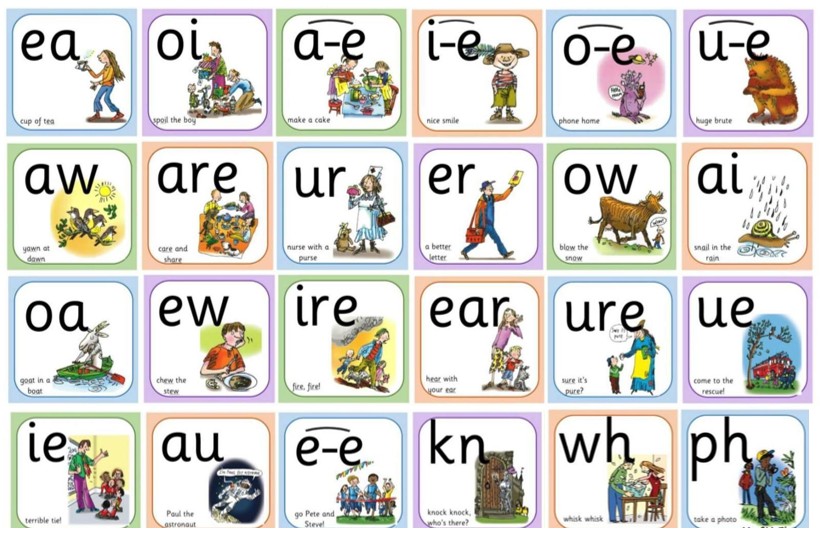
These sounds also have a memorable phrase to help children remember them.
ea: cup of tea
oi: spoil the boy
a-e: make a cake
i-e: nice smile
o-e: phone home
u-e: huge brute
aw: yawn at dawn
are: share and care
ur: purse for a nurse
er: a better letter
ow: brown cow
ai: snail in the rain
oa: goat in a boat
ew: chew the stew
ire: fire fire!
ear: hear with your ear
ure: sure it’s pure?
ue: come to the rescue
ie: terrible tie!
au: Paul the astronaut
e-e: Go Pete and Steve
kn: knock knock, who’s there?
wh: whisk whisk
ph: take a photo
tion: (celebration)
tious / cious: (scrumptious / delicious)
e: he me we she be
What is Fred Talk?
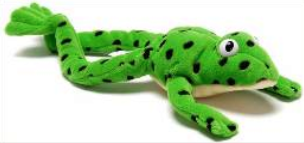
We use pure sounds (‘m’ not’ muh’,’s’ not ‘suh’, etc.) so that your child will be able to blend the sounds into words more easily. Fred is our Read, Write Inc. friend. He can only speak in sounds, so we help him learn to say words instead of sounds. For example, Fred says 'm-a-t' instead of mat.
Sound pronunciation video:
How do children spell with Fred Fingers?
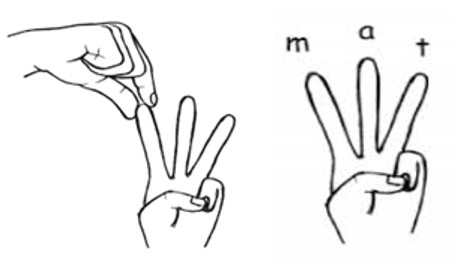
Children are taught to use their fingers to help them write words. The children say the word out loud and break it down into its individual sounds. If a word has 3 sounds children hold up 3 fingers, 4 sounds = 4 fingers etc. Children pinch each finger as they say the sounds needed in the word then they write the letters that represent each sound.
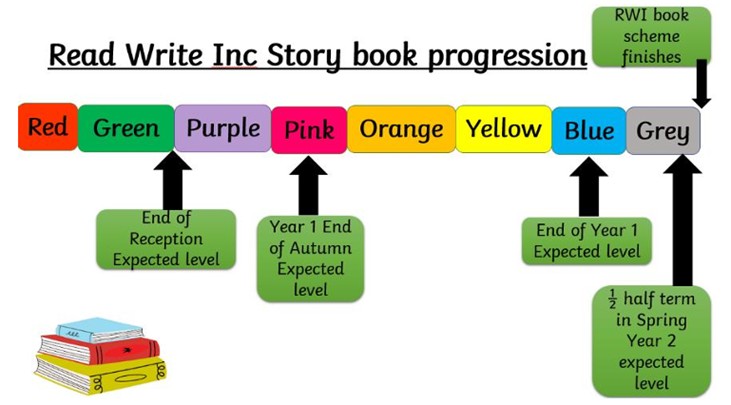
When using Fred Fingers each finger represents one sound. When children reach yellow Read Write Inc. storybooks, they will learn to say the letter names when spelling instead of the sounds.
What are nonsense words (Alien words)?
Nonsense words are words which use sounds but the words they form do not make sense in English.
Research has shown that incorporating nonsense words into teaching reading can be an effective way to establish secure blending and segmenting skills. However, it is important to ensure that children understand that they are reading nonsense words (and why) so that they are not confused by trying to read the words for meaning.
By reading nonsense words children develop their ability to decode individual sounds and then blend them together to read. They are an indicator of early reading skills and work as a quick, reliable, and valid way of assessing children.
Nonsense words also form a part of the Government Phonics screening in Year 1 where children are given a set of words to read to assess their progress.
